Authors: Josefov Rescue Unit and Mr. Rudolf Havelka
Fortresses Without Borders II is a cross-border tourism development project supported by the ERDF under the Interreg Czech Republic–Poland programme (2021–2027). The project addresses the shared challenge of increasing the tourist attractiveness of two historic fortress complexes — the Josefov Fortified Ideal City (CZ) and the Kłodzko Fortress (PL). The total project budget amounts to €2,136,158, of which €1,708,926.38 is provided by the EU. The remaining €427,231.60 is covered by national public co-financing from the project partners.
The entire project is being implemented as part of Czech–Polish cooperation between the towns of Jaroměř and Kłodzko, respectively between their cultural contributory organizations: Kłodzko Fortress, Bastion I and the Underground (part of the Municipal Cultural Centre), and the Jaroměř Museum. This cooperation includes joint promotion, workshops, and above all a future “inter-fortress” game designed to motivate tourists to visit fortresses on both sides of the Czech–Polish border. The cooperation has also been extended to other Czech fortress towns—Terezín, Hradec Králové, and Vyšehrad—within the already existing Fortpass platform.
THE WAR YEAR 1866 COMES TO LIFE IN PUBLIC WORKSHOPS
As part of the Fortresses Without Borders II project, public workshops are held during major events—on the Czech side as part of Oživlý Josefov (Living Josefov), and on the Polish side during Dni Twierdzy Kłodzko (Kłodzko Fortress Days). The main theme is the war year 1866, which historically connects both fortresses. Tensions between Prussia and Austria, escalating since 1864, culminated in war on 15 June 1866. Even before the first shot was fired, both sides were intensively preparing for conflict.
Preparations in Kłodzko
In Prussia, alongside offensive plans, authorities also considered the possibility that Austrian forces and their allies might occupy Prussian territory or attack border areas. These preparations were clearly visible in Kłodzko. The existing fortifications were expanded, materials for the fortress were stockpiled (for example, 27,420 bundles of willow rods), palisades were erected, terrain was modified, embankments were built along the Nysa River, and new defensive structures and telegraph networks were constructed. Some older buildings were demolished as well. Although military operations did not directly affect Kłodzko, the war nevertheless brought significant complications to the town.
Preparations in Josefov
In Josefov, major modifications to the ramparts began as early as April. The number of artillery positions was increased, casemates were reinforced, and fascines and gabions were produced to protect riflemen and artillery crews. Up to three thousand civilians and soldiers worked daily on the fortifications. At the beginning of May, supplies of ammunition, gunpowder, food, and military equipment began arriving. Preparations also involved the fortress underground system.
Interactive Workshop Activities


Workshop visitors were offered practical demonstrations, such as weaving a gabion—a cylindrical wicker basket filled on site with soil or sand and used to construct protective walls against gunfire and artillery. Gabions were also used to build walls around artillery batteries to protect their crews.
Participants could also try assembling a firing mechanism according to a provided plan, similar to those used to detonate explosive charges in underground corridors or approach tunnels.
The final task involved answering questions related to the previous activities and identifying battle sites of the Austro-Prussian War on the Czech side. Successful participants were then allowed to pass through the fortress gate “to the Prussian side,” where they underwent intensive training, including marching with weapons and following commands under the guidance of the Kłodzki Regiment group, which specializes in reenacting the events of 1866.


Upcoming Activities
Planned future activities include:
- A discounted fortress ticket called Fortpass
- A mobile application
- A workbook as part of the so-called inter-fortress game for families with children and other visitors
Sources:
Grzegorz Podruczny, Monografia Historyczna Twierdzy Kłodzko;
Pavel and Olga Mertlík, Josefov: Kapitoly z dějin pevnosti a města.
BASTION I INTERREG PROJECT RECONSTRUCTIONS
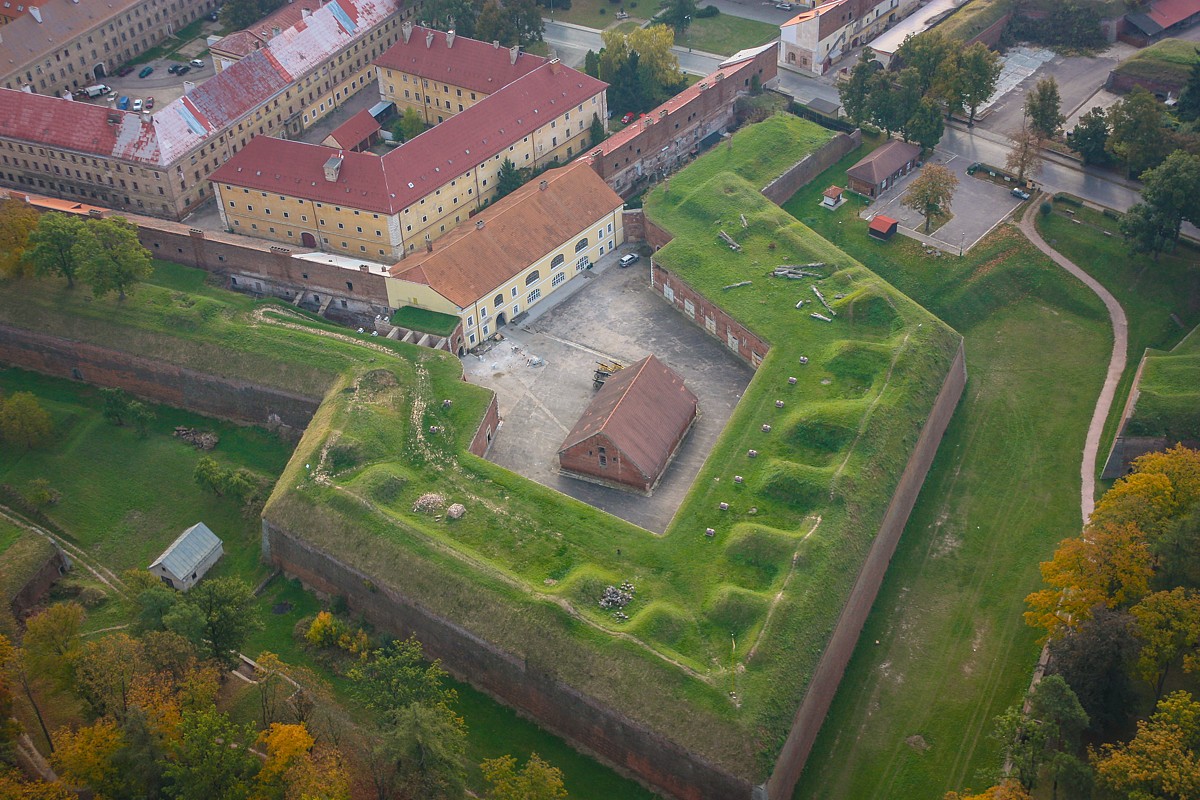
The aim of the reconstruction work is to create a new historical exhibition of the Jaroměř Town Museum in the premises on the first floor of the Double Barracks (the entrance building of Bastion I) and to establish a new relaxation area and facilities for tourists in the casemate in the courtyard of the complex. The broader strategic objective of the project is to increase the tourist attractiveness of Josefov and, consequently, of the entire region.
The project includes costs for construction work as well as expenses for interior furnishings, graphic design, and a promotional campaign. The historical exhibition will present the history of both towns, Jaroměř and Josefov, from prehistory to the present day. The exhibition will be symbolically divided by the flow of the Elbe River. Our ambition is to create an exhibition that fills the residents of Jaroměř and Josefov with pride in the history of their towns—one they will proudly invite friends and family from outside Jaroměř to visit. The exhibition is also intended for educational visits by pupils and students.


The relaxation area in the casemate and the historical exhibition will be opened to the public in the summer season of 2027. The new relaxation and play zone in the casemate of Bastion I’s courtyard will serve the local community well during popular events such as Masopust (Carnival), Dracula’s Journey, or Christmas Eve at the Fortress.
The author of the interior design of both buildings is academic architect David Vávra, while the construction project was designed by Ing. Tomáš Valášek from Fort 21, s.r.o.


 English (UK)
  Deutsch
  Français
  Italiano
  Polski
  Español
Leave a Reply