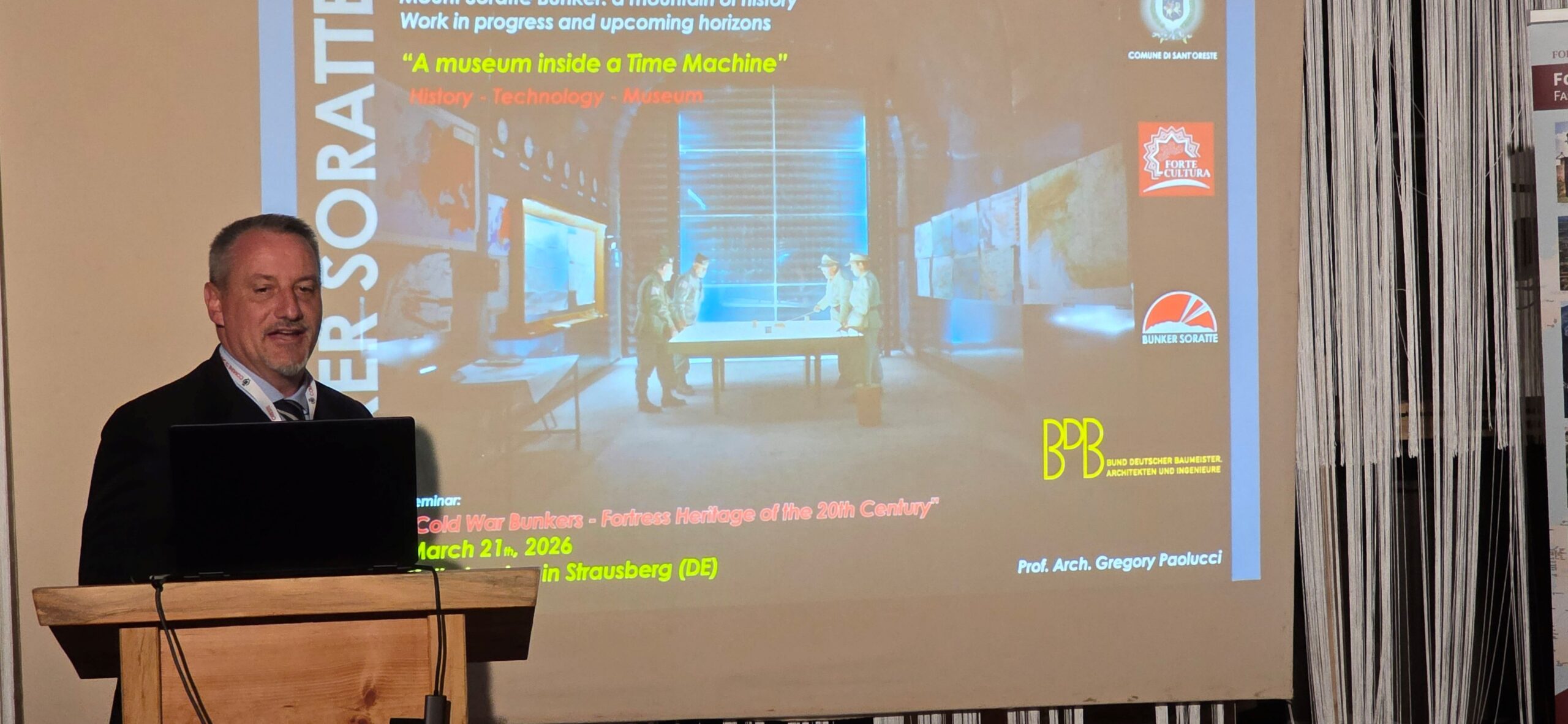
A successful Italian-German seminar on Cold War bunkers took place in Brandenburg on 21 March 2026 in Strausberg. In the postal bunker of the former GDR, participants and speakers took the opportunity to exchange experiences and presentations, using decommissioned government and state bunkers as case studies.
The international event was organised and run by FORTE CULTUTRA in cooperation with the Brandenburg district group of the Berlin-Brandenburg regional association of the BDB (Association of German Builders, Architects and Engineers) and the Culture Bunker Strausberg.
FORTE CULTURA brings together fortifications from all periods dating back to the advent of firearms
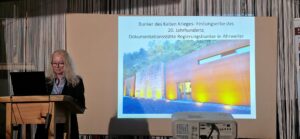
The seminar began with an introduction to the history of fortification and so-called ‘Architectura Militaris’, which spans from rampart and moat fortifications, through Roman forts, medieval castles and town fortifications, modern citadels and bastion fortifications, to 19th-century fort complexes and Cold War bunker complexes. Today, the European Cultural Route FORTE CULTURA links numerous disused sites from the field of fortifications and bunkers with the aim of promoting cross-border cultural-historical and tourist development. Although some bunkers are still active today, many others serve as museums or memorials. As relics of an era of constant threat, they illustrate the extent to which technology, politics and architecture are intertwined, whilst at the same time serving as a reminder of the need to preserve peace and international understanding as our highest values. To bring these stories to life, the FORTE CULTURA cluster was established as part of the European Cultural Route, focusing on the theme ‘Underground Fortresses: The Secret Structures of the Cold War’.
Four examples of the conversion of Cold War-era bunkers that were formerly of strategic importance were then used to illustrate potential development opportunities, as well as the associated problems and future challenges.
Bundesbank Bunker Cochem, DE
The Federal Bank Bunker in Cochem was constructed from 1962 onwards to safeguard monetary stability in the event of a crisis. It was completed by 1966, comprising a two-storey main tunnel and access tunnels. After it was decommissioned in the late 1980s, it was sold on several occasions. Today, the site is a museum offering insights into the history of the Cold War and attracting over 40,000 visitors annually.
Ahr Valley Government Bunker Exhibition Centre, DE
Designed as a massive nuclear fallout shelter in the Ahr Valley, it was intended to house the Bonn government in two interconnected tunnels in the event of war. It stretches for more than 17 kilometres and was designed to accommodate 3,000 government officials. Following its closure, the bunker was dismantled between 2001 and 2006, though part of it was preserved as a museum. It serves as a documentation centre on the history of the Cold War; since its opening in 2008, over 1.1 million visitors have toured the bunker
Monte Soratte Bunker, Sant’Oreste, IT
The Italian Monte Soratte bunker, located north of Rome, has undergone a similar development. The underground complex, situated within the mountain, stretches over more than four kilometres in length and was constructed between 1983 and 1943. Initially, it served Mussolini’s fascist government; from 1943, it was used by the German Wehrmacht; and after the war, it served as Italy’s largest munitions depot for ten years until 1962. Prompted by the Cuban Missile Crisis, a five-year expansion took place to convert it into a nuclear-proof bunker capable of accommodating Italy’s highest-ranking officials; it remained classified under the NATO security code ‘Cosmic Top Secret’ until 2008. The bunker comprises two levels and has a floor area of 1.3 km², protected by a limestone ceiling at least 200 m thick. Today, the bunker is a historical museum attracting over 40,000 visitors annually.
Culture Bunker Strausberg, DE
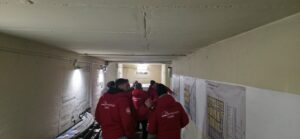
The former postal bunker in Strausberg has been used as a cultural and memorial site since 2018. The bunker was built between 1979 and 1984 to protect state telecommunications infrastructure. It served as an emergency centre for the GDR and was equipped with state-of-the-art technology. After reunification, the bunker lost its military function and fell into disrepair over the years. Today it is used as a venue for cultural events and educational programmes to convey the history of the GDR and the Cold War. The 600-metre-long gallery tunnel is one of the longest of its kind in Europe.
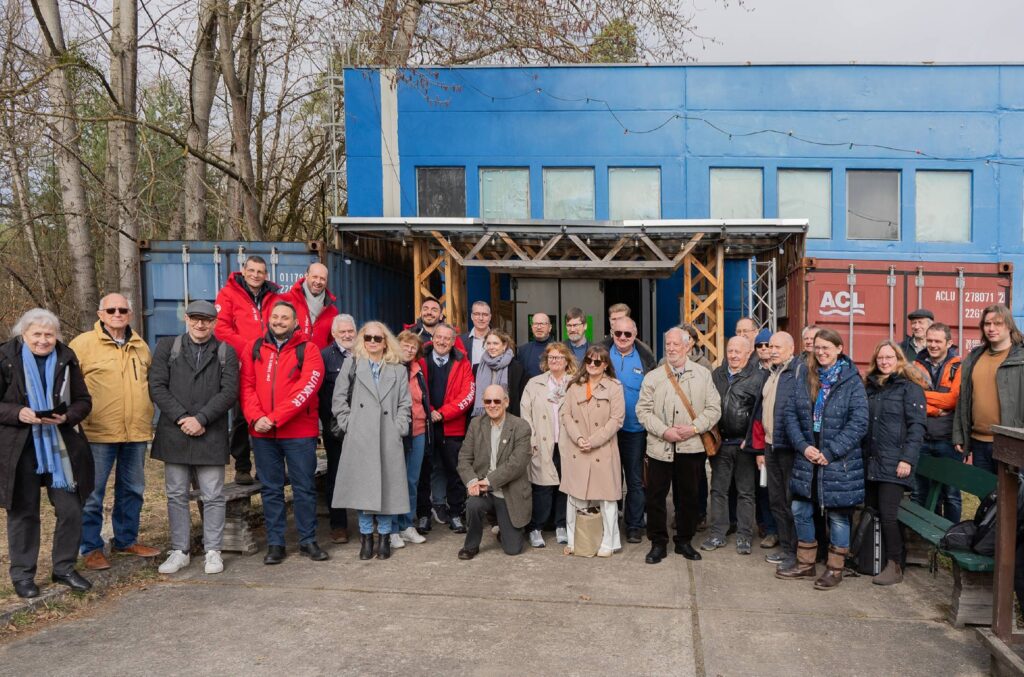
There was no clear answer to the question of whether the bunkers, now used as museums, could resume their original protective function today. This depends not least on their structural and technical condition. Above all, questions regarding what level of protection can be expected in the future require a cross-party political response. The FORTE CULTURA brochure ‘Discover bunkers of the Cold War’, jointly produced by the organisers, and the recently published booklet ‘Civil Defence’, made available free of charge by the Federal Agency for Civic Education, were in any case gratefully received by all seminar participants.
Further publications relating to the event:
- https://mol-nachrichten.de/aktuell-detail.php?id=5775
- https://www.strausberg-live.de/fotogalerie.php?id=111180



 English (UK)
  Deutsch
  Français
  Italiano
  Polski
  Español
Leave a Reply