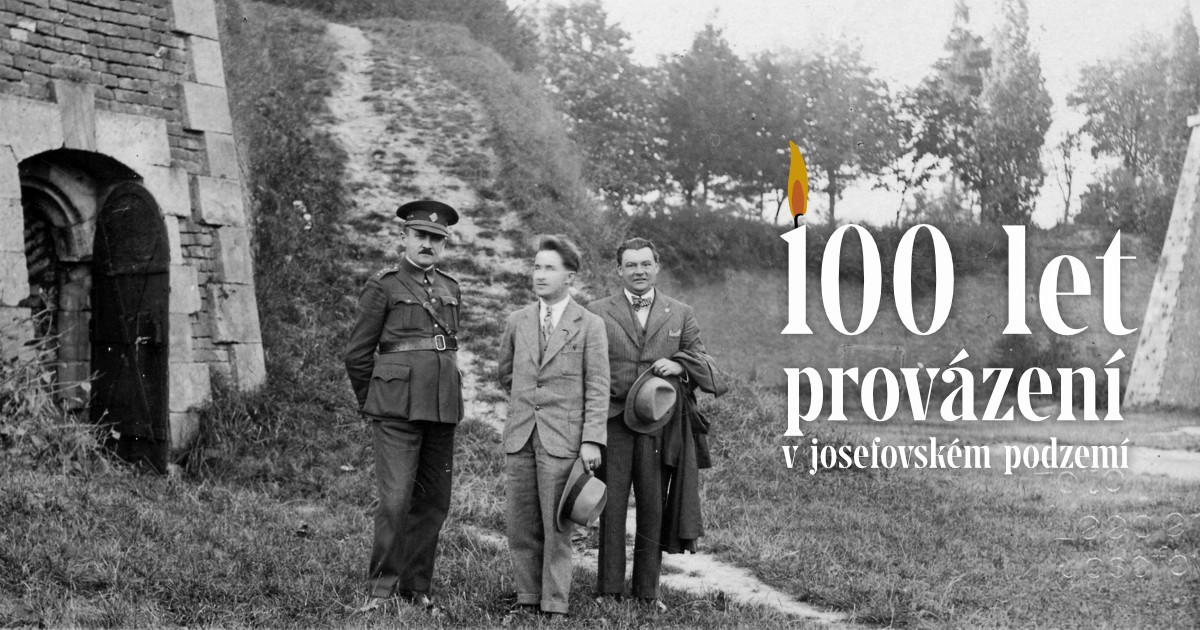
In 2026, Josefov proudly celebrates a remarkable milestone: 100 years since the first official guided tours of its underground corridors began. These 45km-long corridors, originally built purely for defensive purposes in the 18th century, have become one of the most intriguing parts of the fortress history. Over the past century, it is estimated that around 1 million visitors have explored this unique underground network. In the last decade alone, the underground has attracted approximately 25,000 visitors per year.
How It All Began – 1926
In the 1920s, Josefov faced very different challenges than the preservation of its monuments or the development of tourism. The city focused on dismantling parts of its fortifications to modernize and keep pace with other fortified cities like Hradec Králové, Brno, Olomouc, and Prague. Ambitious plans, including the potential navigation of the Elbe River to Josefov and the construction of a port, were eventually abandoned. Most of the fortress’s defensive structures survived, though not always in perfect condition.
Interest in Josefov as a cultural site began to grow thanks to the active local branch of the Czechoslovak Tourist Club (Klub československých turistů, KČST), founded on January 26, 1922. Leading figures included Lieutenant Colonel Perner, Major Stolina, František Večeřa, sirs Baše, Bartoš, and Svoboda. From the very beginning, the club worked to establish accommodations for visitors in the local school during holidays and became involved in the national trail-marking system, including the Božena Němcová trail starting in April 1923.
By 1923, the first ideas emerged to preserve parts of the underground corridors and open them to visitors. Early exploratory tours even took place before the official opening. František Večeřa, who became the club’s chairman in 1925, played a crucial role in promoting the underground and preparing it for public tours. The corridors were improved through collaborative efforts with local associations, with expenses partially covered from the club’s own funds and partially through private contributions.
Official public access was granted on June 4, 1926, when the first visitors, students of the third year at the state industrial school, entered the underground corridors. Tickets, priced between 1 and 3 Kč, were collected by the Czechoslovak Tourist Club. While the initial public interest was modest, tours became a unique combination of educational trips, local representation, and guided visits by various delegations. Visitors were typically required to register in advance at Večeřa’s bookstore.
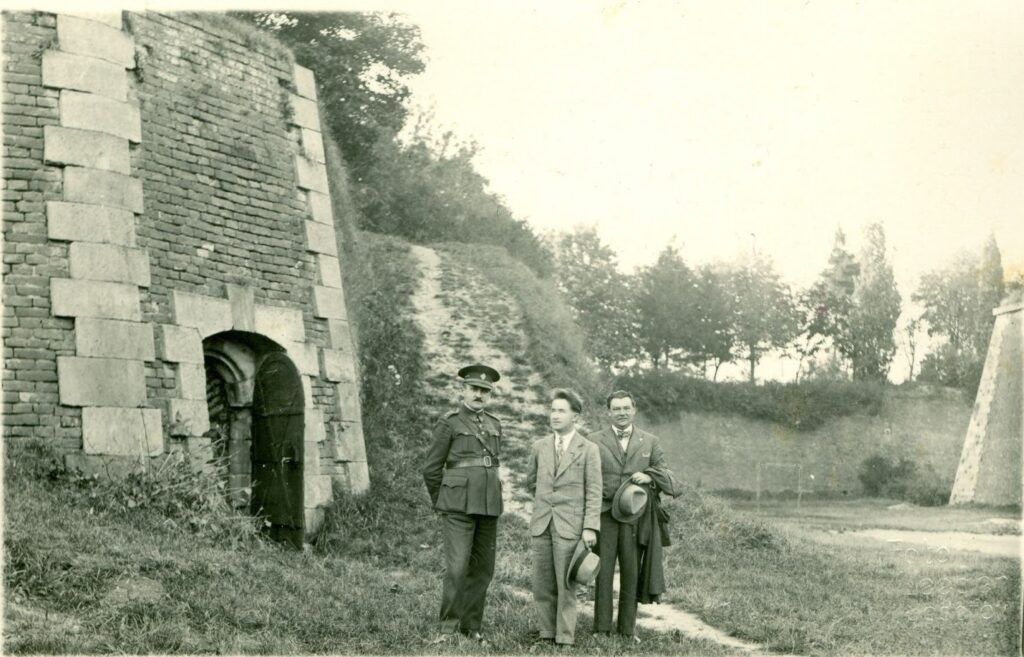
First tourist guides in the underground (photo from the Memories of Travels of the Czechoslovak Tourist Club, Josefov Branch, courtesy of Petr Schwab).
Centennial Celebrations in 2026
The centennial celebration will reach its peak on 5th June 2026, with events planned throughout the year to honor this historic milestone, as we continue to build on the enormous work of our predecessors – tens of thousands of hours spent on restoration, maintenance, volunteer efforts, and the creation of cultural content.
A new book accompanies the anniversary, made possible with support from the regional funds (Královéhradecký kraj). The book explores how the site has been presented over time and offers insights into the dedication of generations of guides, volunteers, and history enthusiasts who have preserved Josefov’s cultural heritage. From uncovering hidden stories that visitors would rarely notice on a regular tour to recounting the operational efforts behind the scenes, the publication brings to light a century of devotion.
Together with FORTE CULTURA, we are thrilled to share this story, which aligns perfectly with the FORTE CULTURA mission in cultural tourism. We hope our project will inspire other heritage sites across Europe and beyond to explore the history of their landmarks and honor the people who have made cultural heritage accessible and alive.
The year 2026 promises a journey through history like no other.
 English (UK)
  Deutsch
  Français
  Italiano
  Polski
  Español
Leave a Reply