Category: From the member stations
-
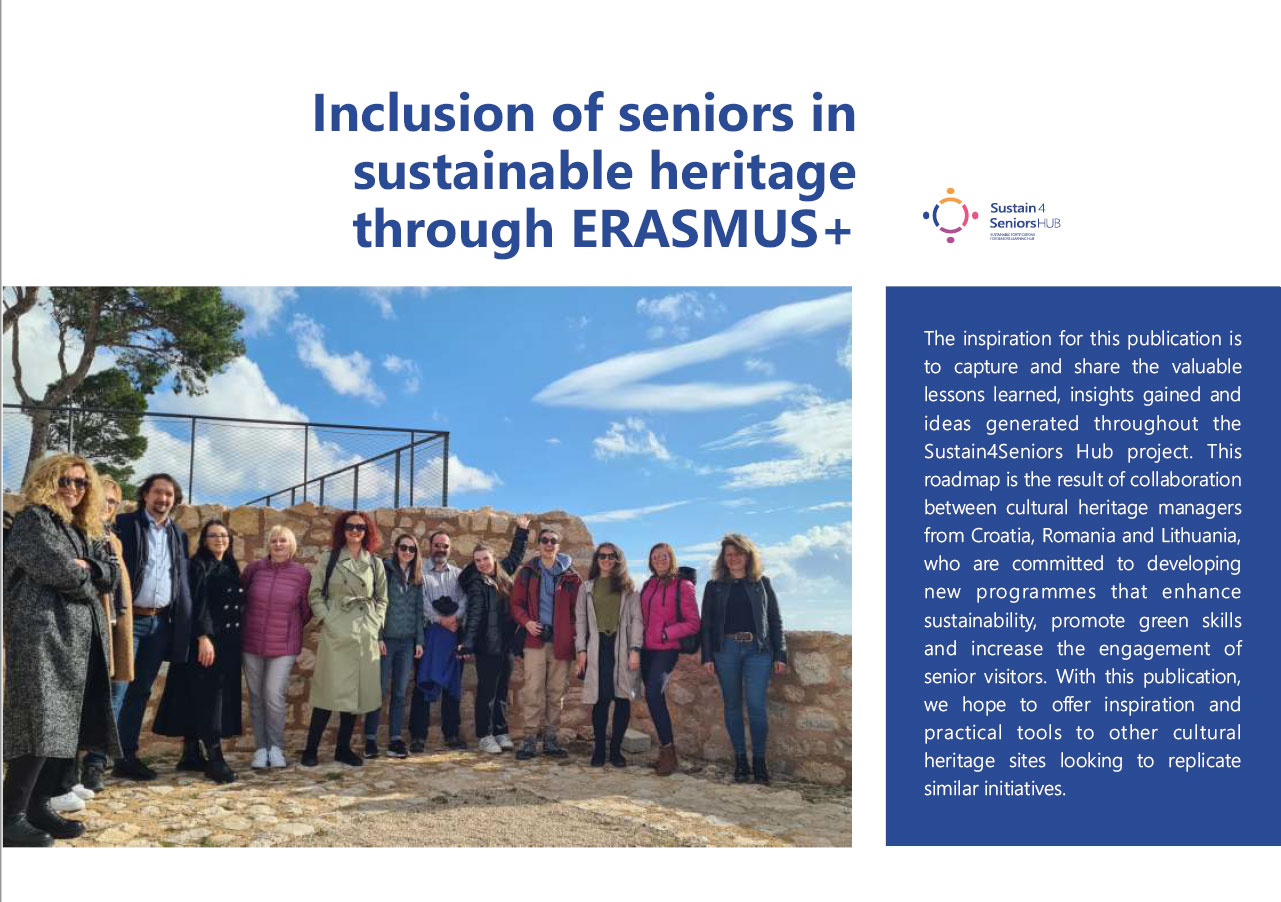
Sustain 4 Seniors in cultural heritage sites
ERASMUS+ Projekt „Nachhaltige Befestigungsanlagen als Lernzentrum für Senioren“ der Kulturfestung Festung Šibenik (Kroatien/Šibenik), gemeinsam mit Asociatia Mioritics (Rumänien/Constanța) und Viešoji įstaiga Kauno tvirtovės parkas (Litauen/Kaunas). Das Projekt Sustain4Seniors Hub wird im Rahmen des Programms Erasmus+ finanziert, einer Initiative der Europäischen Union zur Förderung der Zusammenarbeit in den Bereichen Bildung, Ausbildung und Kultur in ganz Europa.…
-

Fortezza (Franzensfeste, IT) becomes FORTE CULTURA Station
The Franzensfeste fortress has guarded the Brenner Pass on the Italian side since 1838. With its 65,000 square metres of building space, it is the largest historical complex in South Tyrol. This masterpiece of Austrian fortress architecture extends over several floors with a labyrinth of rooms, corridors, courtyards and staircases. Originally designed as an impenetrable…
-

Ingolstadt (DE): New leaflet about Fort Prinz Karl
Cover photo: The board and advisory board of the Friends’ Association present the new leaflet The Förderverein Bayerische Landesfestung Ingolstadt e.V. has published a large leaflet on Fort Prinz Karl. It shows an elaborate three-dimensional reconstruction of the fort as it was in 1895 after the building was reinforced. In addition, the entire eventful history…
-

Kiev (UA): National Historical-Architectural Museum “Kiev Fortress” becomes FORTE CULTURA Station
Kiev Fortress is a monumental complex of former Russian fortresses from the 17th-19th centuries. The complex is one of the largest preserved fortresses in Europe. Visitors can see a unique permanent exhibition of artillery history “From Core to Projectile” and the only collection of automatic weapons in Europe. The National Historical-Architectural Museum is located in…
-
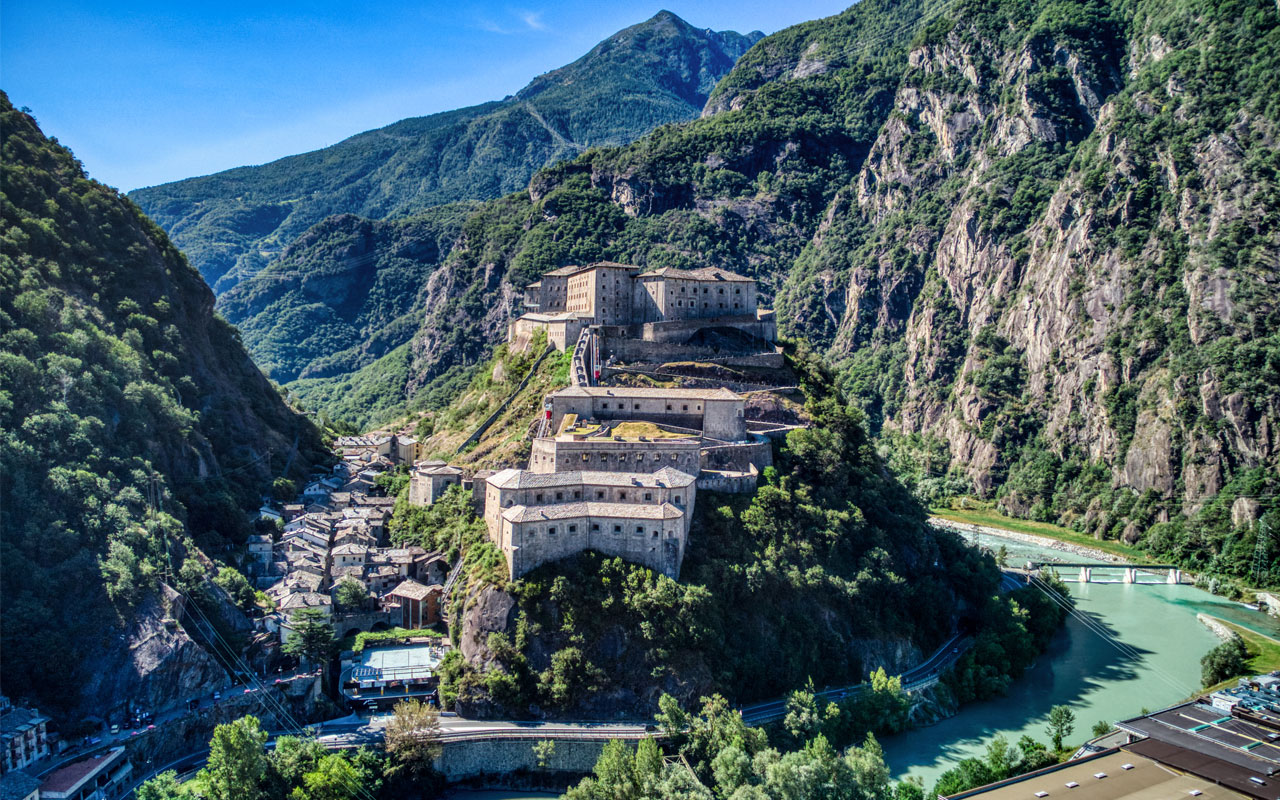
Forte di Bard (IT): New FORTE CULTURA station in Italy
(Photo: ©Hagai Agmon Snir) The Bard fortress is one of the masterpieces of fortress architecture from the first half of the 19th century. After Napoleon had completely destroyed a previous fortress, Carlo Alberto Amadeo, King of Sardinia-Piedmont, rebuilt the mighty mountain fortress in the Aosta Valley from scratch from 1830 onwards. Today, museums and modern…
-
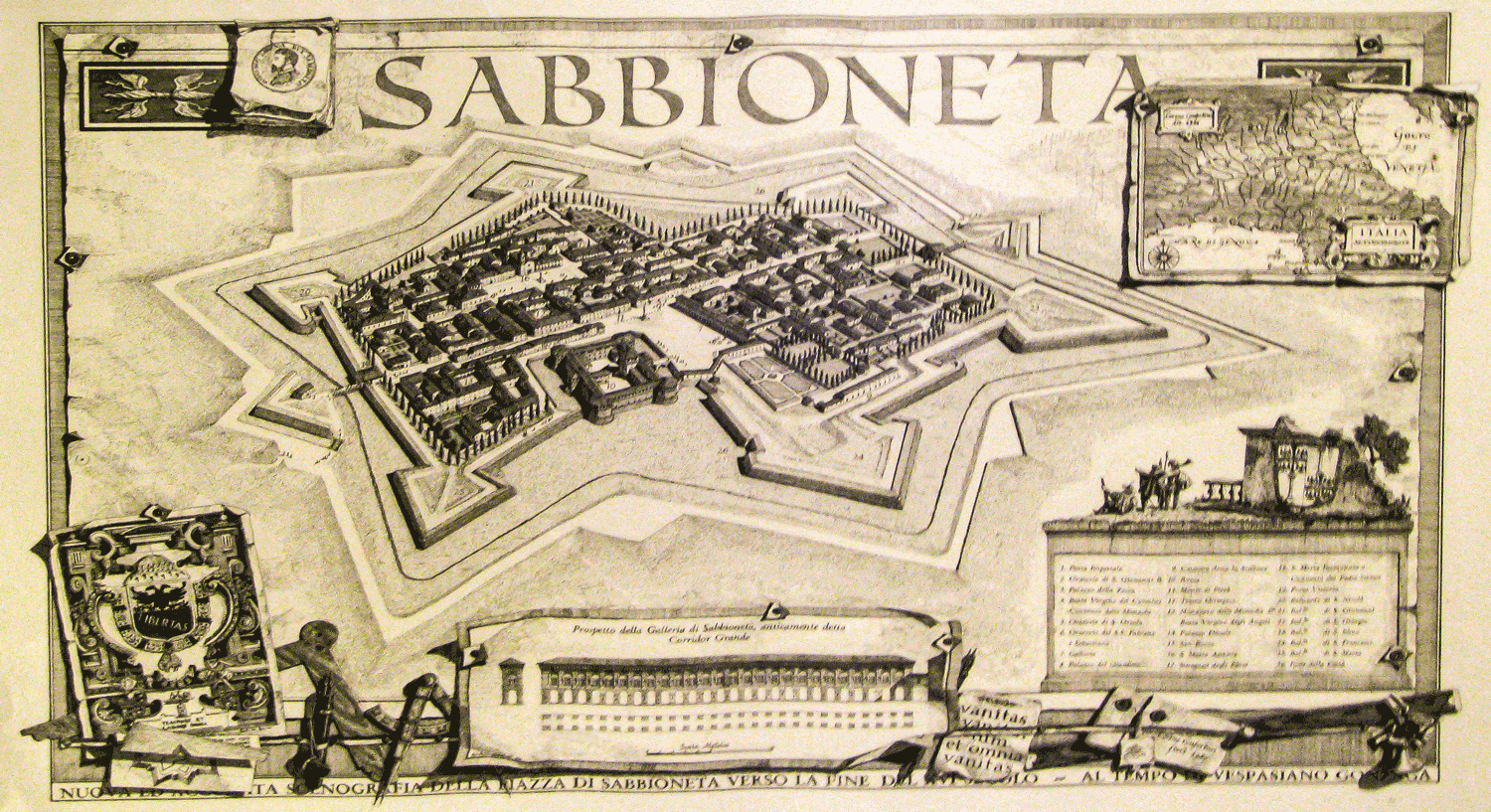
Sabbioneta (IT): New FORTE CULTURA station in Italy
The fortified ideal town of Sabbioneta was built between 1554-1571 and was one of the first of its kind in Europe. It was also the first autonomous town foundation of the Renaissance. The city wall in the form of an irregular hexagon is completely preserved. The old towns of Sabbioneta and Mantua have been UNESCO…
-
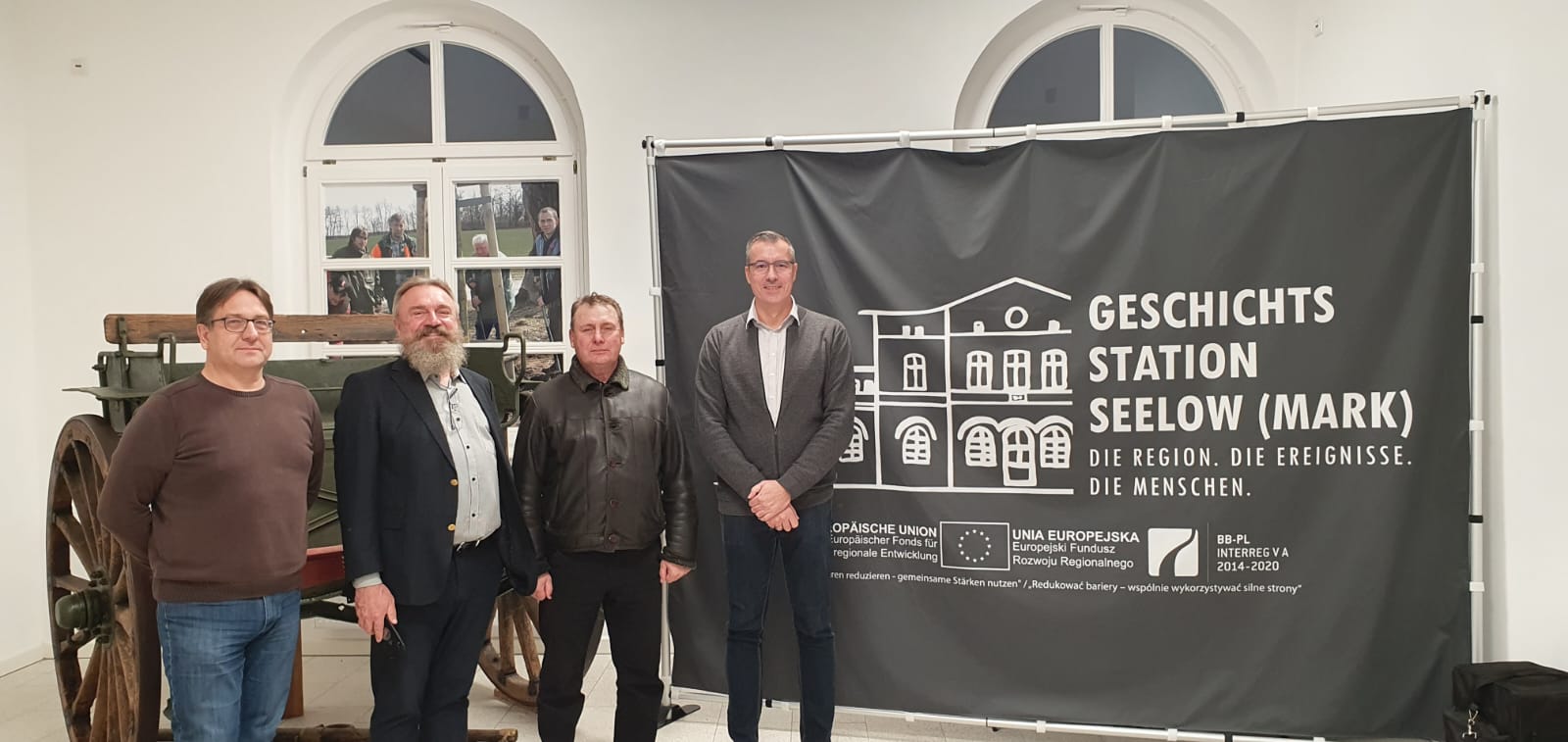
Seelow (DE): Fortress Medzhybizh visit
Oleg Pogorelets, director of the Ukrainian fortress Medzhybizh, and Dirk Röder (FORTE CULTURA) met at the German–Polish border to exchange news and discuss upcoming activities. Oleg reported on the war and its impacts on the fortress — which has already suffered some damage from mis‑aimed projectiles and from shock waves of large explosions nearby. He stressed…
-
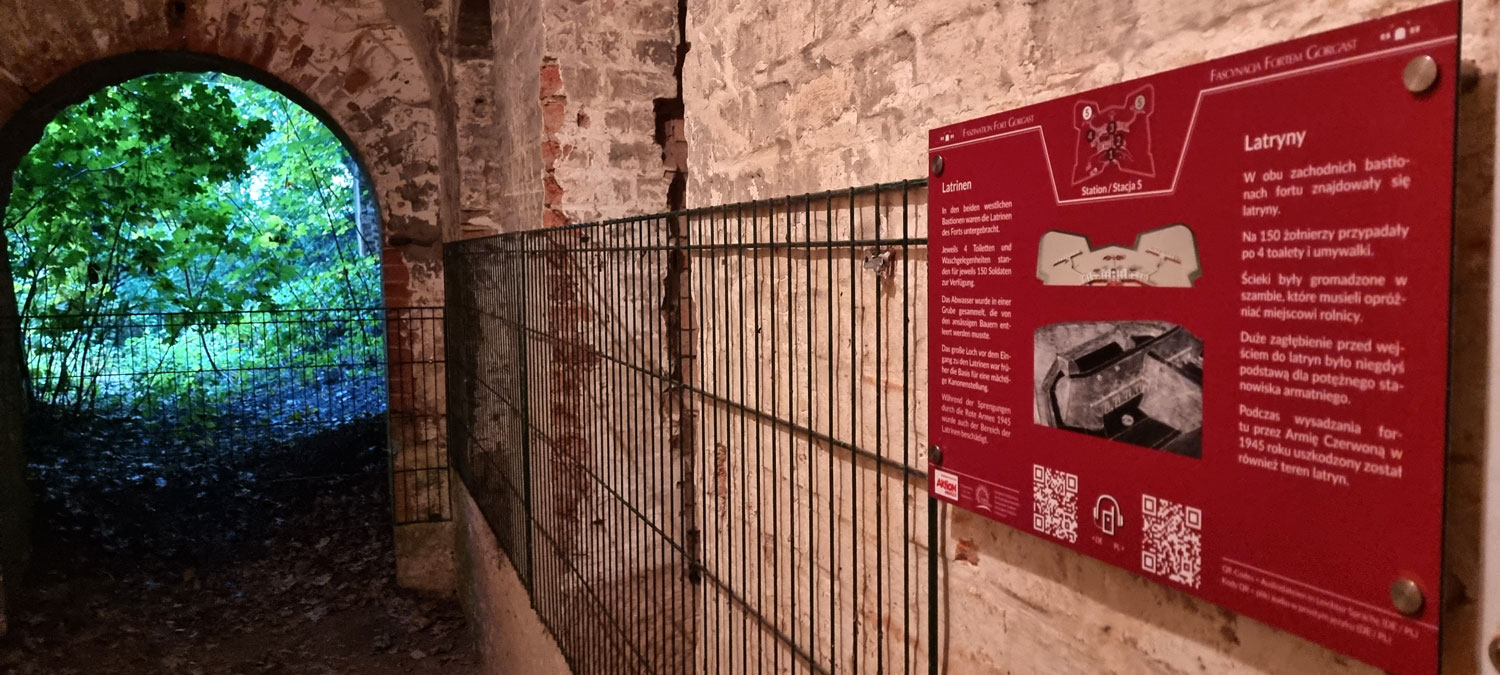
Fort Gorgast (DE): Tour in easy language opened
Thanks to a grant from the Aktion Mensch lottery totalling €4,674.50, a new circular route in plain language has been established at Fort Gorgast.
-
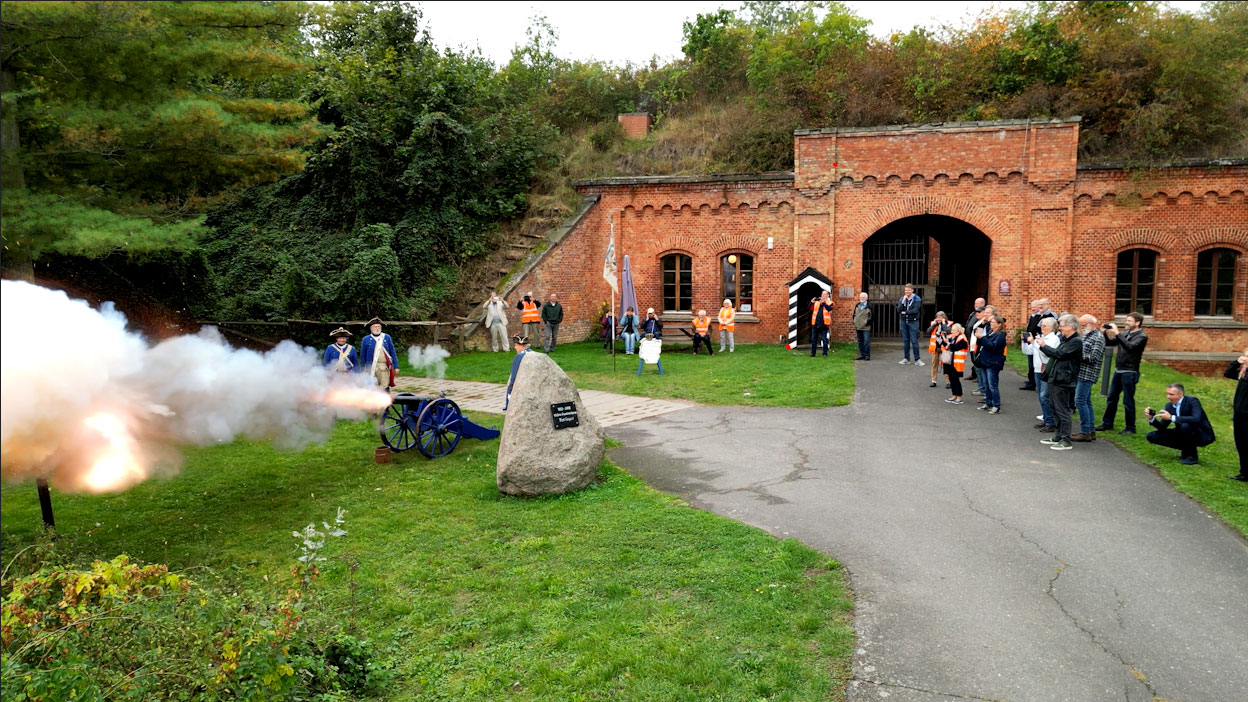
Fort Gorgast (DE): Annual Meeting of the Bund Deutscher Baumeister und Architekten (BDB), Bezirksgruppe Brandenburg
27 members and guests met on the occasion of the annual meeting of the BDB Bezirksgruppe Brandenburg at Fort Gorgast. Opening with welcome remarks by Tino Krebs (Director of the Amt Golzow), guest lectures by Dirk Röder on FORTE CULTURA, Josephine Kroneberg on the exemplary development of the Ravelin 2 Magdeburg restoration association, and Marcin…
-
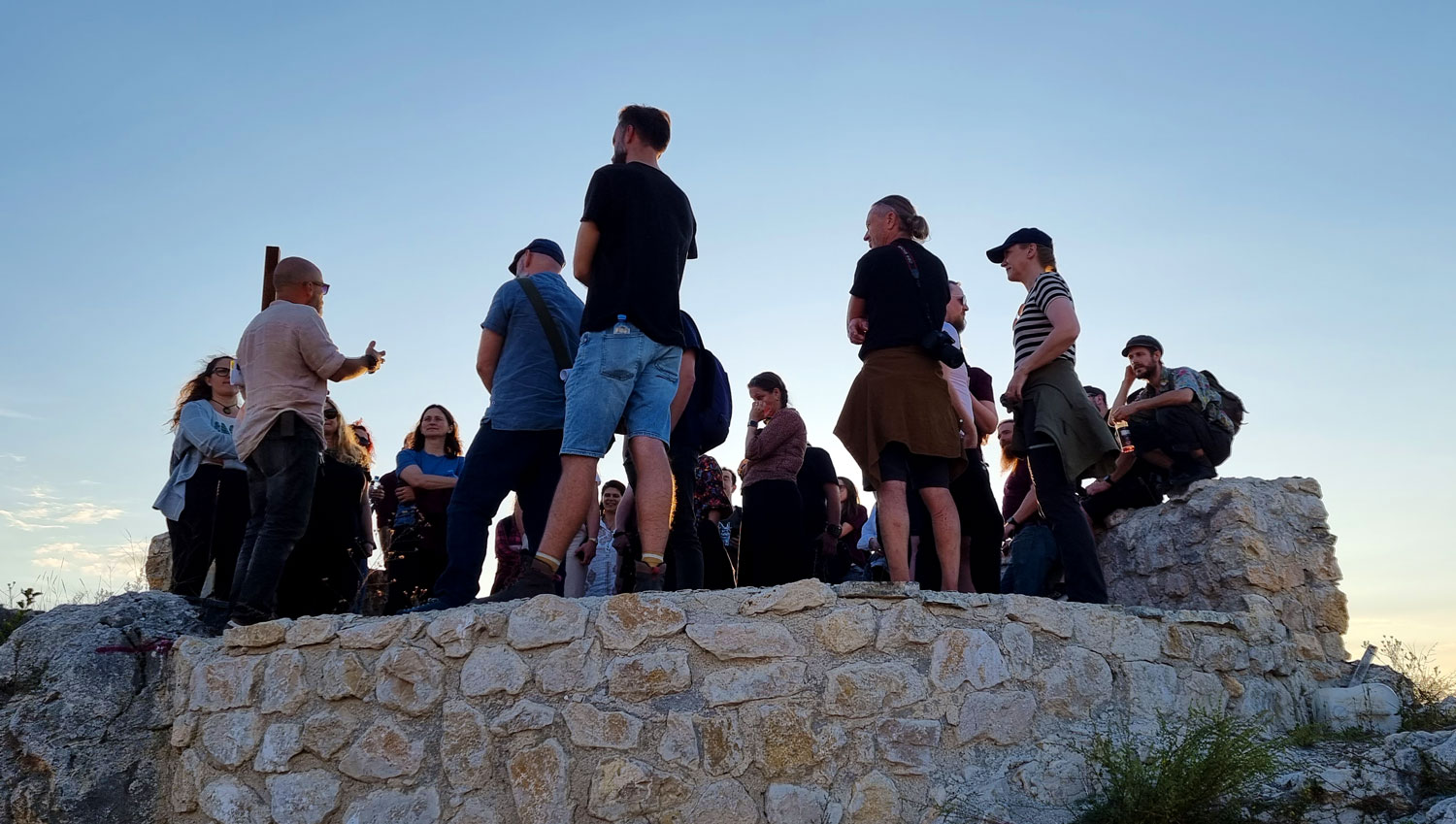
Râșnov (RO): Seminar, Workshops and a Medieval Festival
A medieval festival at Râșnov Fortress was the occasion for an international creative seminar with workshops, aimed at developing sustainable usage and management models for the fortress, which is currently under renovation. 30 participants from 8 countries used the framework of the excellently organized event (organized by Mioritics, Hands on History, and the city of…
-
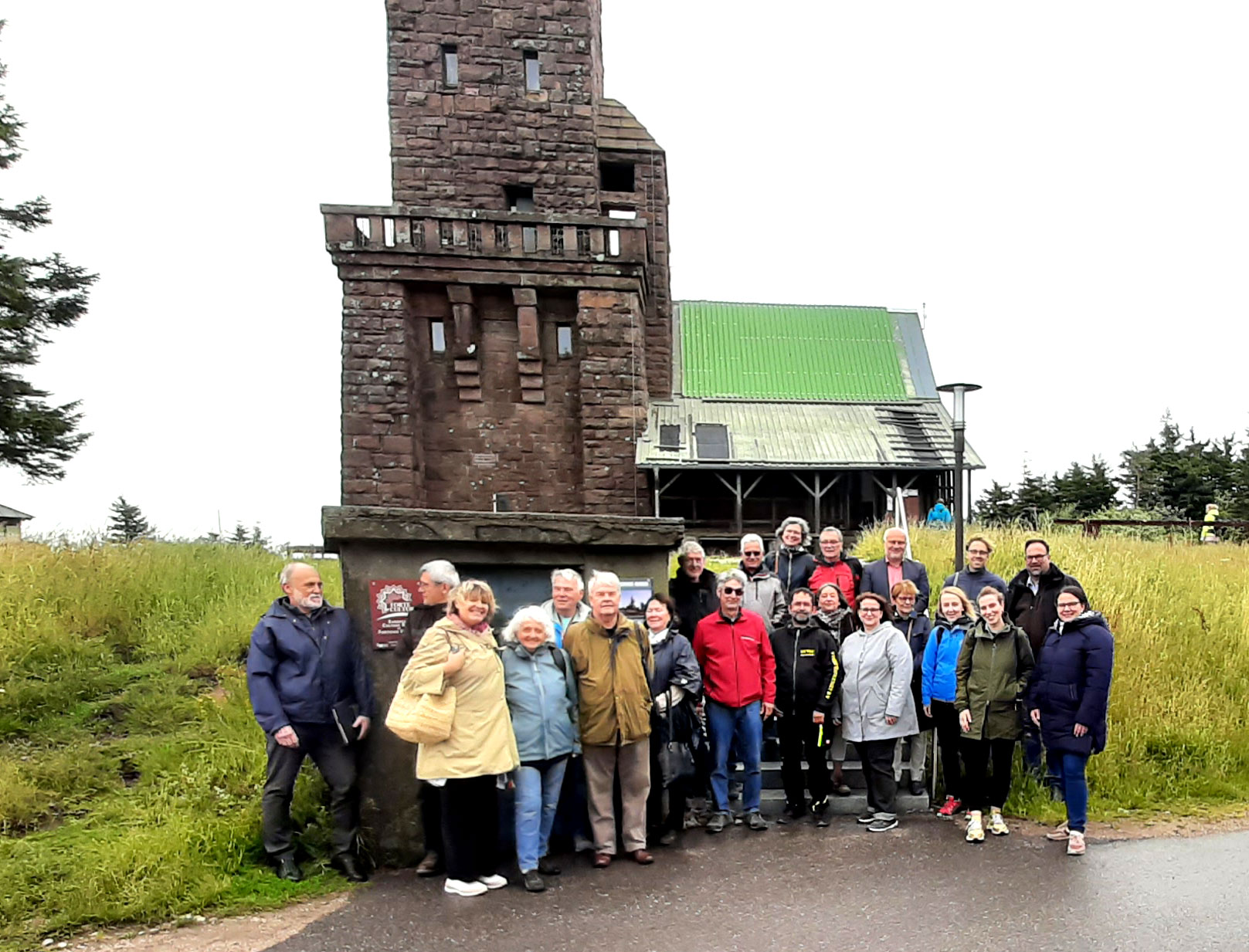
Hornisgrinde (DE): FORTE CULTURA Fortress Cluster Upper Rhine Project Meeting
19 partners of the German-French cooperation of fortresses and museums along the Upper Rhine met at the Grindel Hütte Hotel-Restaurant on Hornisgrinde to discuss current topics related to cross-border collaboration. Guests of honor included Katrin Schindele, Member of the Baden-Württemberg State Parliament and Deputy Chair of the Committee on Economy, Labor, and Tourism, and Reinhard…
-
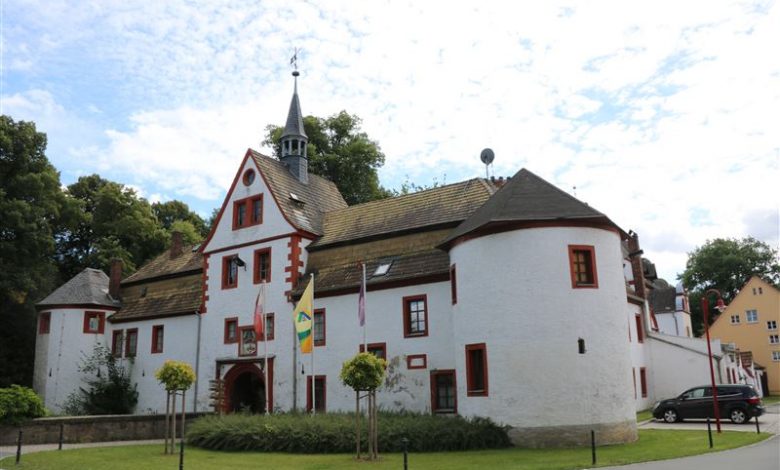
Windischleuba (DE): New FORTE CULTURA Station in Thuringia
The moated castle of Windischleuba was first established in 925 as a border fortress to protect the neighboring town of Altenburg and was later converted into a fortified manor. For a long time, it was owned by the Counts of Meissen and Münchhausen. The formerly trapezoidal complex has an enclosing wall with four defensive towers…
-
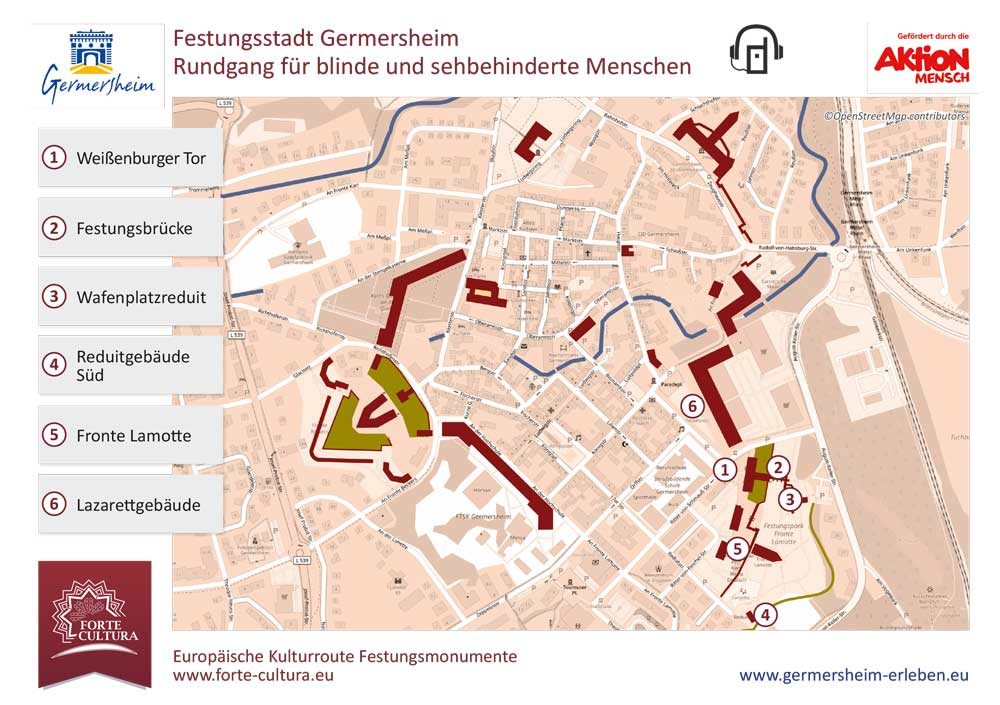
Germersheim (DE): Aktion Mensch inclusion project completed
As part of the “#1 Barrier Less” funding programme of the Aktion Mensch lottery, FORTE CULTURA and the fortress town of Germersheim have already developed a circular route for blind and visually impaired people in 2021, which provides information about the fortress town of Germersheim on Braille signs and in audio files at 4 stations.…
-
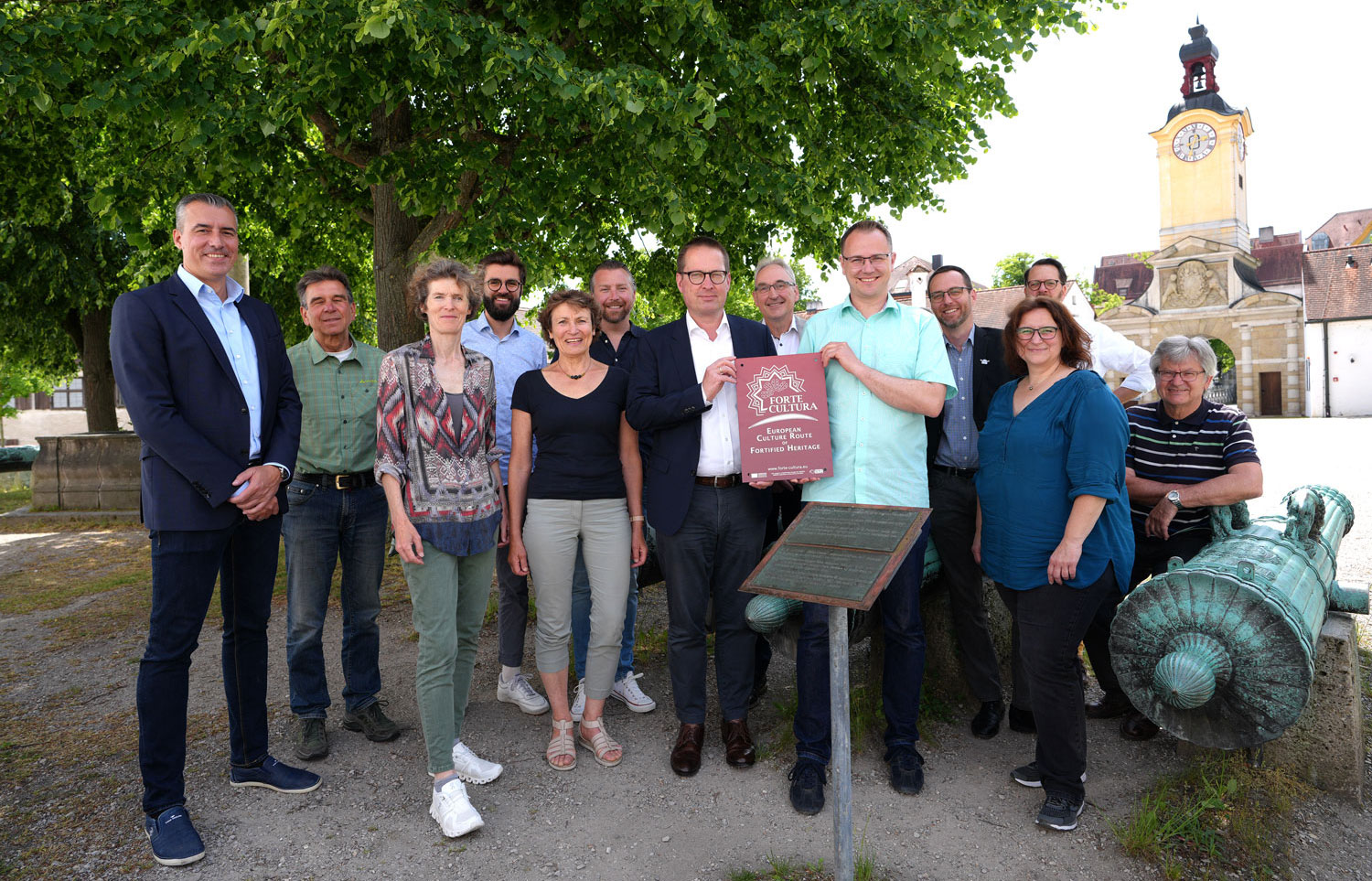
Ingolstadt (DE): FORTE CULTURA Regional Workshop
The meeting room in the tower of the Ingolstadt Army Museum, dating from 1420, provided the perfect setting to discuss the future of the Bavarian state fortress in connection with FORTE CULTURA. The workshop, attended by tour guides and representatives of the city of Ingolstadt as well as guests from Germersheim, Ulm, and Kronach, was…
-
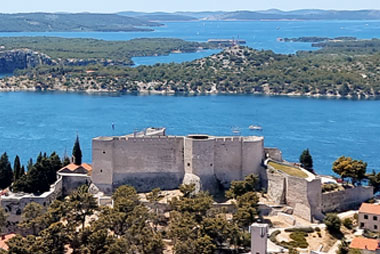
Šibenik (HR): New FORTE CULTURA Station on Croatia’s Adriatic Coast
The fortresses of Barone, St. John, and St. Michael, managed by “Kulturfestung Šibenik,” have been extensively renovated over the past 10 years and equipped with a wide range of recreational and educational functions. With numerous innovations and forward-looking investments, they rank among the European best practices in the sustainable development of historic fortifications, as was…
-
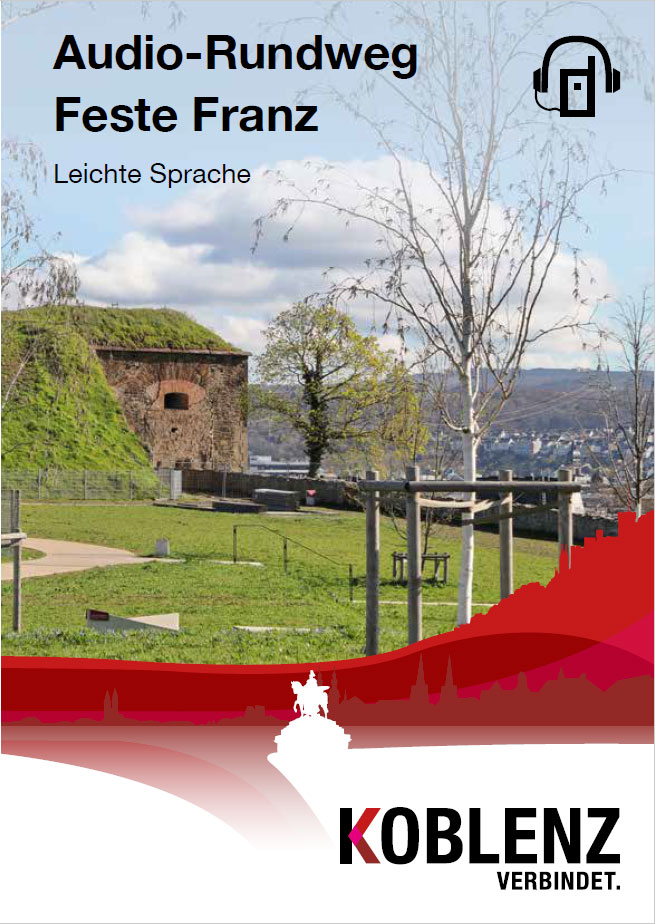
Koblenz (DE): Aktion Mensch inclusion project completed
Feste Kaiser Franz receives a leaflet about the fortress in plain language As part of the “#1 Barrier Less” funding programme of the Aktion Mensch lottery, FORTE CULTURA and the fortress city of Koblenz (Koblenz’s own green space and funeral services) have developed a circular route in plain language in the “Kaiser Franz Fortress Park”.…
-

Ingolstadt (DE): Fortified City Becomes New FORTE CULTURA Station in Bavaria
The Bavarian state fortress of Ingolstadt was expanded over five historical periods into the large fortress system seen today. On both sides of the Danube, there are partially very well-preserved fortifications spanning five centuries, representing the Renaissance fortress, the post-Thirty Years’ War expansion, the Neoclassical fortress (reconstruction after demolition by Napoleon), as well as an…
-

Fort Gorgast (DE): Aktion Mensch Inclusion project approved
The Aktion Mensch Lottery has approved further project funding for FORTE CULTURA e.V. to remove barriers, this time at Fort Gorgast (DE). An amount of €4,674.50 was granted for the creation of a circular trail with information for people with intellectual disabilities in plain language. Signs and audio guides in German and Polish will in…
-
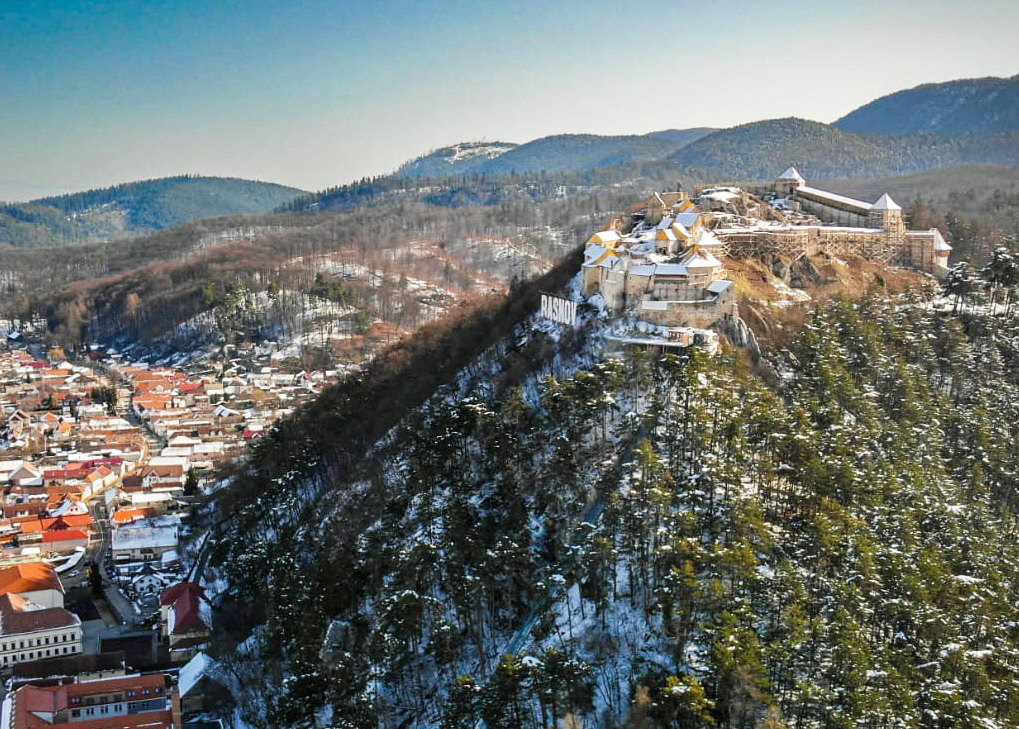
Râșnov (RO): Râșnov Fortress Becomes First FORTE CULTURA Station in Romania
Râșnov Fortress (Rosenau) is picturesquely situated on a hill above the eponymous town in Transylvania, Romania. The “peasant castle” is a 14th‑century refuge fortress that provided shelter to the local population during wartime, sometimes for decades. Today, Râșnov Fortress is a popular tourist attraction. In recent years, extensive restoration work has been carried out, and…
-

San Marino (SM): Republic of San Marino Becomes FORTE CULTURA Station
San Marino is one of the oldest republics in the world. The small state in the southwest of the Italian province of Emilia-Romagna also possesses a pronounced fortress heritage, some of which is included in the UNESCO World Heritage List. The fortresses of Guaita, Cesta, and Montale on the ridge of Monte Titano are even…
-

Küstriner Vorland (DE): Fort Gorgast Becomes New FORTE CULTURA Station
Fort Gorgast was built at the end of the 19th century and is an outer fort of the former Küstrin Fortress (Kostrzyn nad Odrą, PL). The Prussian Biehler fort is the only one of the four outer forts of Küstrin Fortress located on the western side of the Oder River, and it is also the…
 English (UK)
  Deutsch
  Français
  Italiano
  Polski
  Español